Campbell's Dividend Cut Changes the Math. Is Smucker the Clear Winner?
Campbell's just slashed a dividend it had held steady for years, while its rival moved in the opposite direction.
 CPB - Campbell Soup Company
Campbell's just slashed a dividend it had held steady for years, while its rival moved in the opposite direction.

Five household grocery names faced the same brutal pressures, but their dividends went in three different directions. The balance sheet details behind each decision reveal which income payouts are built to last and which still carry hidden risk.

CPB is ramping up digital and AI-enabled marketing to boost everyday meal sales, leveraging recipe inspiration and rising demand for affordable home cooking.
Campbell's just made its most painful dividend decision in over two decades, and the debt load behind it raises a bigger question about whether even the new, smaller payout can survive what's coming in 2027.
The company's final quarter of 2026 broadly met expectations, however its profitability guidance fell short, and its dividend was cut. This took place amid rising food costs in the U.S., a dynamic that's putting pressure on companies in the industry.
Four packaged food stocks sit on the same grocery shelves, but their dividends tell completely different stories about which companies are quietly rebuilding and which ones are still in danger of the next cut.

Campbell's just slashed a dividend it had protected for 25 years, and Smucker carries some of the same warning signs that preceded the cut.
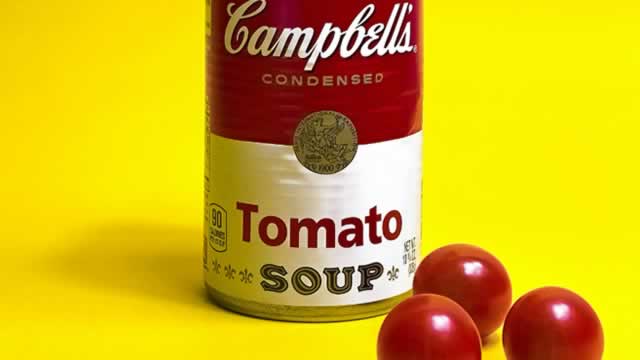
Campbell is rated a Buy, as current valuation reflects significant risk and offers an attractive risk-reward for long-term investors. CPB's 35.9% dividend cut strengthens its balance sheet, supporting debt reduction and providing flexibility amid rising interest expenses and macro uncertainty. FY27 guidance signals more near-term weakness: organic net sales down 4%-2%, adjusted EPS down 24%-17%, and gross margins pressured by inflation and negative pricing.
Campbell's is rated Buy at $20, despite weak FY2027 guidance, due to long-term catalysts and a 5% dividend yield. Rao's remains CPB's standout growth asset, with strong brand momentum and significant runway for household penetration and category expansion. A $500 million cost savings program through FY2030 offers substantial EBIT leverage, even if revenue remains flat and Snacks merely stabilizes.
MAC Alpha Capital Management LP lifted its holdings in shares of The Campbell's Company (NASDAQ: CPB) by 25.4% in the second quarter, according to the company in its most recent filing with the Securities and Exchange Commission. The fund owned 284,545 shares of the company's stock after buying an additional 57,631 shares during

A yield above 6% gets attention, but the real question is whether the cash flow behind it survives the next quarter. Four names on this list pass that test, and one very recognizable brand just proved what happens when the answer is no.
A yield above 6% looks like income until the cash flow behind it disappears. Four names on this list pass the coverage test, and one is here specifically because it just failed it.

In partnership with pro dancer, Witney Carson, the brand rolls out Two-Step Tuesdays by Campbell's -- proving delicious weeknight dinners are just two steps away Key Takeaways: With new Campbell's® Sauces, a delicious and satisfying dinner is possible in just two steps: cook your favorite protein and add the Campbell's Sauce of your choice for a meal worth gathering for in 20 minutes or less. Four full-bodied flavors offer something for every taste: Thai Curry, Butter Chicken, Creamy Lemon Garlic and Smothered Chicken.

In this article series, I summarize dividend announcements of the past week. This week, 5 stocks announced dividend increases, one announced a cut, and one announced a special. BRC and PECO are the only Investment Grade stocks among this week's dividend announcers, both trading near fair value with robust safety profiles. CPB's 35.90% dividend cut signals severe safety deterioration, while VICI and LAMR present high yields but carry notable safety and growth concerns.

The Campbell's Company reduced its dividend by 36% after a challenging FY2026, sending shares sharply lower and creating a potential value opportunity. CPB's Q4 earnings revealed margin compression, declining sales, and continued pressure on both the Meals & Beverages and Snacks segments, with management targeting $500M in cost savings. Despite a 4.7% dividend yield and a forward P/E of 12.39x, persistent inflation and weak outlook suggest a slow turnaround, with shares likely to remain rangebound.

The Campbell's Company (CPB) Presents at Barclays 19th Annual Global Consumer Staples Conference Transcript
First dividend cut since 2001.

Barron's August 24th, 2026 stock picks highlight 47 dividend payers, with Danone, Gap, and Kohl's emerging as "safer" ideal candidates. Top ten picks by yield project 15.4% to 44.59% gains by September 2027, with an average net gain of 23.6% and risk/volatility 14% below the market. Dividend dog strategy identifies contrarian opportunities, emphasizing price pull-backs and yield improvement for both new and existing positions.
Conagra and Campbell's already made their moves, but several other legacy food giants are sending quieter signals that income investors have learned to recognize too late. Three warning patterns separate a frozen payout from the next cut.

Campbell's CEO Mick Beekhuizen calls results "unacceptable" as the company slashes 13% of salaried workers and targets $500 million in savings.